
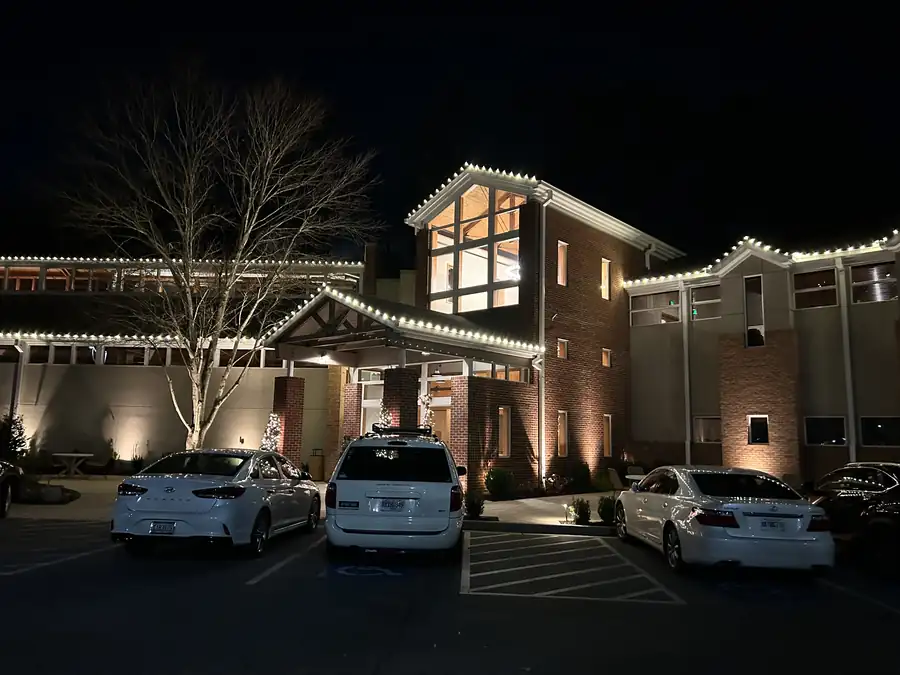
Safety and insurance questions are part of choosing a professional Christmas light installer, especially when a project includes elevated rooflines, tall trees, commercial areas, or regular customer traffic. The property owner does not need to diagnose every risk, but the estimate conversation should make access, work boundaries, outdoor components, and service responsibilities clear.
Holiday Shine should only make insurance or credential claims that are current and verifiable. Customers can ask for confirmation directly during the estimate rather than relying on generic website wording that may not reflect a specific project or policy period.
Identify Elevated and Difficult Access Before Work Begins
Show the installer which peaks, eaves, upper rooflines, trees, slopes, gates, or narrow side yards are part of the requested display. These conditions can change the equipment, sequence, and amount of work required. Avoid treating access as an installation-day surprise. A property-specific plan should distinguish the areas that are in the approved scope from optional zones that may require different access or should be excluded.
Keep Outdoor Electrical Planning Within the Professional Scope
Customers should not need to rewire installed sections or open electrical components to keep a professional display operating. The installation plan should use components appropriate for outdoor seasonal use and organize the display so problems can be reported by visible zone. If an installed section stops working, describe what is dark from a safe position and let the service process handle hands-on troubleshooting.
Discuss Property Protection and Work Boundaries
Landscaping, gutters, roofing surfaces, painted trim, gates, parking areas, and customer walkways may affect how an installation is approached. Point out sensitive areas and any surfaces that should not be used for access or attachment. Commercial properties should also identify operating hours and areas that cannot be blocked. Clear work boundaries help the installer plan the approved display without assuming unrestricted access to the property.
Ask Insurance Questions Directly and Verify Current Information
If insurance coverage is important to the project, ask the installer what coverage applies and request current documentation when appropriate. Do not rely on an old badge, copied claim, or generic statement as proof. Requirements can differ for a homeowner, HOA, property manager, or commercial site, so the responsible approach is to verify the current information that applies to the actual work being quoted.
Clarify Who Handles In-Season Service
Outdoor seasonal displays can need attention after installation. Holiday Shine includes in-season maintenance for the seasonal lighting it installs. The estimate should still identify the installed scope so both the customer and service team know which roofline, tree, entry, or landscape zones are covered. Customers should also know the safe way to report a problem without climbing or disturbing working sections.
Include January Takedown in the Safety Plan
Removal is another period of ladder and access work, so it should be treated as part of the project rather than an unrelated future task. Holiday Shine includes January removal at no additional service charge for its installed seasonal display. Confirm any post-season gate, parking, business-hour, or property-access constraints before the end of the season so the takedown can follow the same clear boundaries used during installation.
Ask for Evidence Instead of Assuming a Credential or Policy
Safety and insurance questions are most useful when they lead to verifiable answers. Property owners can ask a provider to explain the work scope, how access to elevated areas is planned, what property restrictions should be identified, and what documentation is available for any credential or coverage the provider represents. Avoid treating a website phrase, vehicle logo, or generic industry statement as proof of a specific policy. If documentation is important to a commercial owner, HOA, or property manager, request the current evidence needed for that decision before approving the work rather than relying on an assumption.
Match the Safety Conversation to the Actual Property
A one-story home with a simple roof edge presents a different access discussion from a multi-level residence, steep driveway, mature tree, commercial entrance, or property that must stay open to customers. Share roof height concerns, gates, pets, pedestrian routes, parking limits, landscaping, overhead obstacles, and restricted work periods during the estimate. The installer can then evaluate the actual property and proposed display zones. This guide intentionally does not prescribe jobsite methods or make claims about a provider’s coverage; its purpose is to help customers ask property-specific questions before the project is approved.
Include Access Restrictions in the Written Scope
If a property has an area that should not be entered, a gate that requires coordination, a roof section with unusual access, or a business entrance that must remain clear, put that information into the project notes instead of relying on an installation-day reminder. Written access constraints help the estimate reflect the actual conditions and give the customer a reference if the property needs an in-season service visit later. The same principle applies to January removal because the crew may return weeks after installation. Clear property-specific notes are not a substitute for the installer’s own safety assessment, but they help prevent avoidable surprises and make the customer’s expectations easier to communicate.
Know Which Questions Belong in the Estimate
The estimate is the right place to raise property-specific concerns before a date is scheduled. Ask how the requested zones will be evaluated, identify access restrictions, and request any documentation that the property owner or manager requires for approval. Questions about a specific provider’s insurance, licensing, or credentials should be answered with current evidence from that provider, not inferred from this article. Keeping those verification questions explicit helps the customer make a documented decision without relying on generic assumptions.
Christmas Light Installation Safety & Insurance Questions FAQs
Should I climb up to inspect an installed lighting problem?
No. Describe the visible affected area from a safe position and use the installer service process rather than performing elevated or electrical troubleshooting yourself.
How should I verify an installer insurance claim?
Ask for current information or documentation that applies to the project when insurance verification is important. Do not rely on an unverifiable website claim.
What property details should I mention before installation?
Identify roof height, gates, slopes, sensitive landscaping, restricted surfaces, customer traffic, operating hours and any areas that should not be accessed.
Does Holiday Shine include post-install service?
Holiday Shine includes in-season maintenance for its installed seasonal display and January removal at no additional service charge, subject to the approved project scope.
Property-Specific Design
Request a Holiday Shine Christmas Light Quote
Share your Kennesaw property address, the rooflines or landscape areas you want highlighted, and your preferred color style. Holiday Shine can use those details to define the installation scope and current scheduling options. In-season maintenance for the installed display and January removal are included at no additional service charge.